

Understanding the Basics: Why Consistency Matters in Skincare
The Science Behind a Routine
Building a skincare routine is not just about slathering on products daily; it’s about creating a consistent habit that allows your skin to respond positively over time. Skin cells renew themselves roughly every 28 days, and regular care helps support this natural regeneration. When products are applied consistently, active ingredients can steadily work to improve texture, hydration, and tone. This structured approach strengthens the skin barrier, boosts moisture retention, and can prevent common issues such as dryness, irritation, or premature aging.
Common Misconceptions About Skincare Products
Many people think more products or more frequent application leads to better results, but this is not always true. Overloading the skin can cause irritation or clog pores. Another misconception is that washing the face multiple times a day is necessary. In reality, using gentle cleansing methods, like cleansing only at night and using micellar water in the morning, can maintain the skin’s balance and softness. Understanding these facts helps to avoid unnecessary steps and ingredients, keeping the routine both effective and simple.
Assessing Your Skin Type and Needs Quickly
Simple Tests to Identify Your Skin Type at Home
Before diving into product choices, it’s essential to know your skin type as it dictates what your skin requires most. A straightforward test is to cleanse your face and wait an hour without applying any products. Observe how your skin feels: if it feels tight or flaky, you likely have dry skin. If it shines in certain areas but feels normal elsewhere, you might be combination skin. For oily skin, the face will appear shiny all over, and for sensitive skin, redness or itchiness might occur. These simple observations help tailor your routine effectively.
Determining Your Primary Skin Concerns
Once your skin type is clear, reflecting on your main skin concerns will guide product selection. Common concerns include dryness, dullness, acne, or signs of aging. Select treatments that target these issues specifically—like vitamin C serums for dullness and brightening, or retinol for anti-aging and cell renewal. Knowing these priorities allows for a focused routine without unnecessary products, ensuring each step contributes meaningfully to your skin’s health.
Minimalist Skincare: Choosing Multi-Functional Products
Essential Products That Serve Multiple Purposes
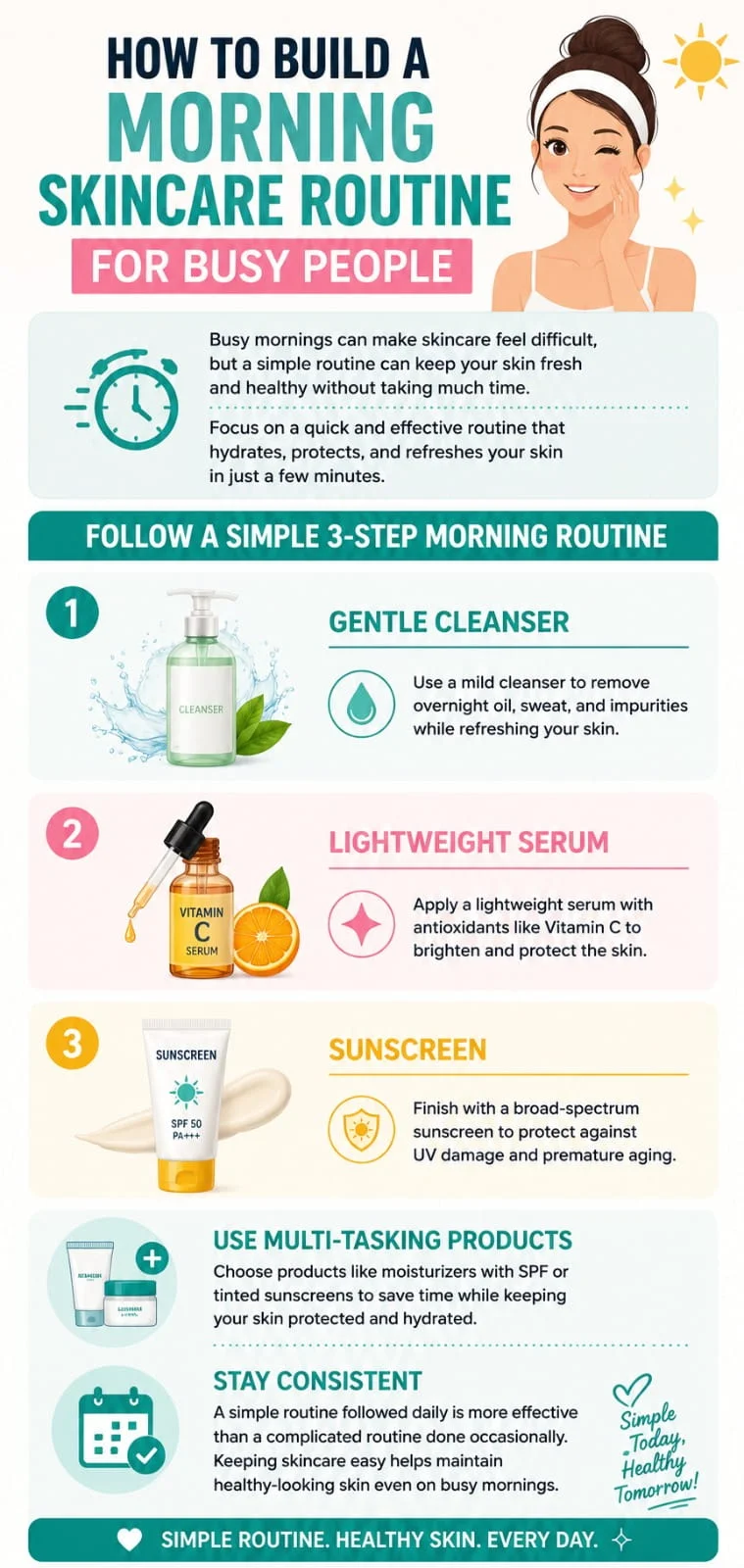
In a minimal skincare routine, it’s best to select products that multitask. For example, a moisturizer that hydrates deeply and includes SPF protection reduces the number of steps needed in the morning. Similarly, a serum that combines ingredients like hyaluronic acid for hydration and antioxidants for protection can cover multiple bases. By choosing these multi-functional products, you simplify the routine, making it easier to maintain consistently.
How to Avoid Overbuying and Overloading Your Skin
The temptation to buy many products can lead to confusion and a less effective routine. To prevent this, focus on the core three steps: cleanse, treat, and protect. Resist impulse purchases of trendy items without research or clear benefits for your skin type. Overloading can disrupt the skin’s natural balance, cause irritation, or even worsen existing conditions. Keeping products minimal and targeted helps avoid these pitfalls and promotes healthier skin overall.
Step-by-Step Guide to a Time-Efficient Routine
Morning Routine: Energizing and Protection
Start your morning routine by gently cleansing your face, or better yet, use micellar water instead of washing. This helps maintain skin’s softness and hydration levels. Follow cleansing with a vitamin C or hyaluronic acid serum depending on whether your focus is brightening or hydration. Finish by applying a lightweight, non-comedogenic moisturizer that contains sunscreen to protect your skin throughout the day. Selecting a sunscreen that absorbs quickly and works well under makeup ensures comfort and continuous protection.
Evening Routine: Cleansing and Repair
At night, thorough cleansing is crucial because your skin needs to shed impurities and makeup accumulated during the day. Start with a double cleanse: first, remove makeup with an oil-based cleanser or micellar water, then follow with a gentle, fragrance-free foaming or cream cleanser. Once the skin is clean, apply treatment products such as retinol or exfoliating acids. These active ingredients promote skin renewal while you sleep. Finally, seal in moisture with a non-comedogenic night cream suited to your skin type.
Weekly Add-ons Without Extra Time Commitment
To enhance your routine without adding significant time, incorporate simple weekly treatments like masks or gentle exfoliation. For example, a hydrating mask can be applied during a relaxing moment, supporting skin health without complicating daily habits. Gentle exfoliation once a week helps remove dead skin cells, ensuring that serums and moisturizers penetrate more effectively. These treatments supplement your routine, providing noticeable benefits without overwhelming your schedule.
Tips to Maintain Consistency Without Stress
Scheduling Your Routine Around Your Daily Life

Integrating skincare into your daily habits makes it easier to stick with. Pick consistent times, such as immediately after waking up and before going to bed, to apply your products. This predictability turns skincare from a chore into a natural part of your day. If mornings are rushed, simplifying the steps to a quick cleansing, serum, and moisturizer can still protect your skin effectively.
Using Reminders and Habit-Formation Techniques
Tools like phone alarms or habit-tracking apps can prompt you to maintain your routine until it becomes second nature. Pairing skincare with other daily activities, such as brushing your teeth, helps anchor the habit. Viewing your skincare routine as an act of self-care—not just a task—can boost motivation, improve your self-image, and increase the likelihood of long-term adherence.
Measuring Progress and Making Adjustments
Tracking Changes in Your Skin
Patience is key in skincare. Keep a simple journal or take photos periodically to observe subtle improvements or any reactions. Changes like increased hydration, reduced redness, or smoother texture typically appear after several weeks. This tracking helps determine what’s working and where adjustments might be necessary.
When and How to Update Your Routine
Your skin’s needs can evolve with seasons, age, or lifestyle changes. If you notice dryness in winter or increased oiliness in summer, adjust your routine accordingly by switching moisturizers or adding hydration boosts. Also, introduce active ingredients like retinol gradually to avoid irritation. Regularly reassessing and adapting your routine ensures it remains effective without becoming overwhelming.


