

Introduction to Desk Stretches for Remote Workers
Understanding the Impact of Prolonged Sitting
Remote work has become a staple for many, providing flexibility but also introducing new challenges. One major problem is prolonged sitting, which can lead to muscle stiffness, poor circulation, and increased tension in various parts of the body. When seated for hours without movement, muscles may weaken and posture can suffer, increasing the risk of discomfort and fatigue. This sedentary pattern affects not only physical health but also overall productivity and well-being.
Benefits of Incorporating Stretching into Your Workday
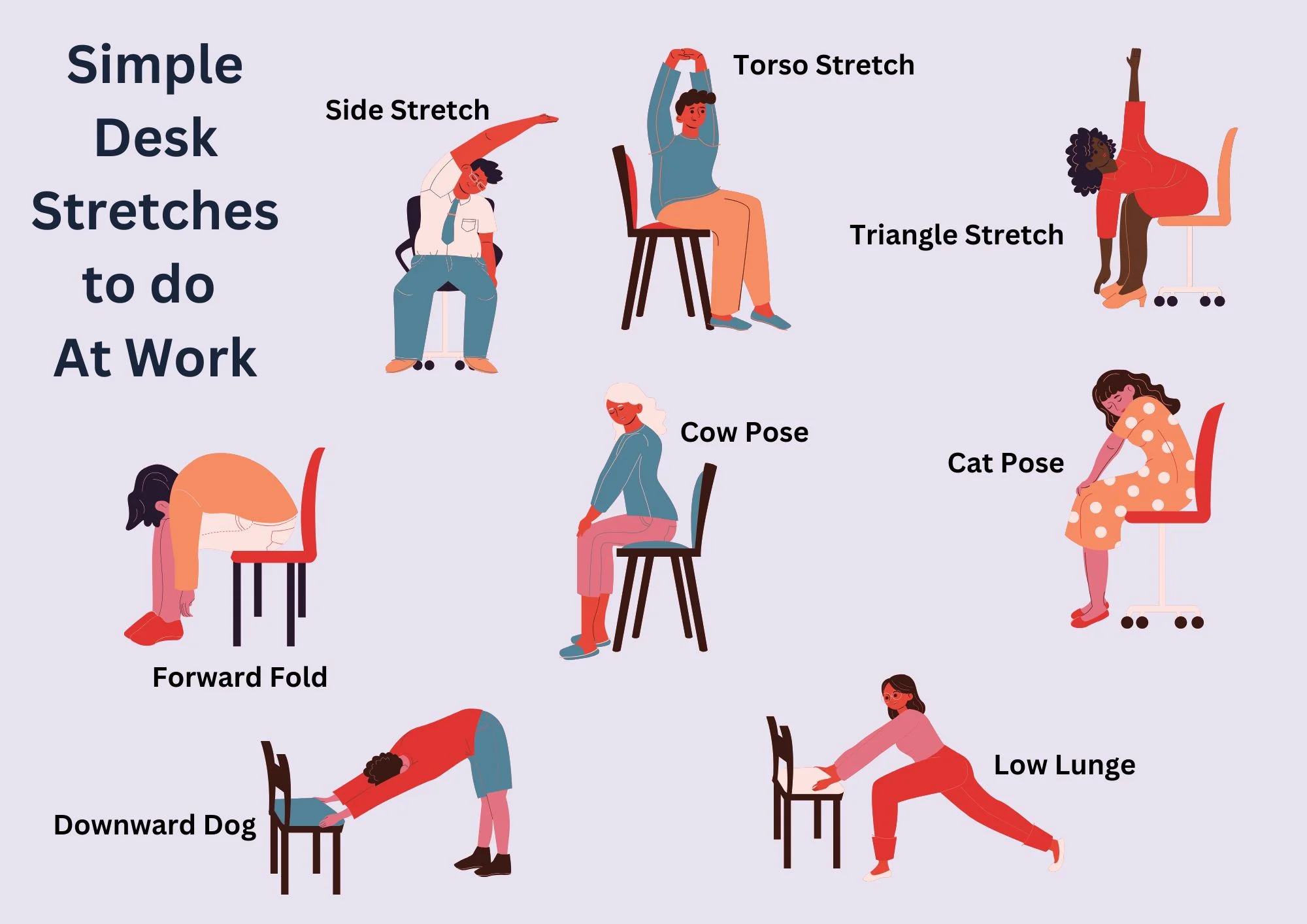
Adding simple desk stretches throughout the workday provides a practical solution to combat the negative effects of long sitting sessions. Stretching helps relieve tension, promotes better blood flow, and encourages good posture by resetting body alignment. For remote workers especially, these movements counterbalance time spent in potentially non-ergonomic environments. When performed consistently, stretches can reduce stiffness, prevent repetitive stress injuries, and support sustained focus and comfort.
Common Tension Points During Remote Work
Neck and Shoulder Stiffness
One of the most frequent complaints during remote work is tension around the neck and shoulders. This develops due to forward head posture, often caused by screens positioned too low or sitting without proper support. Holding these positions for extended periods causes muscles to tighten and reduces mobility, which may lead to discomfort, headaches, or fatigue.
Lower Back Discomfort
Lower back pain is a prevalent issue linked to poor sitting habits and lack of movement. Sitting for long hours without breaks or adequate lumbar support compresses the spine and strains back muscles. Over time, this can create muscle imbalances and stiffness, making it difficult to maintain a healthy posture and increasing the risk of chronic discomfort.
Wrist and Hand Strain
Extended typing and mouse use can lead to wrist and hand strain, particularly when ergonomic setup is lacking. Poor wrist positioning and repetitive motions without counter-stretching can cause tension and soreness. This strain can limit hand mobility and contribute to fatigue, underscoring the need for targeted stretches during the workday.
Effective Desk Stretches to Alleviate Tension
Neck Rolls and Side Stretches
Neck rolls gently release tension by mobilizing the cervical spine. The problem arises when neck muscles remain tight from constant forward head posture. Performing slow, controlled neck rolls helps stretch and loosen these muscles. Side stretches complement this by opening up the sides of the neck and upper shoulders, encouraging flexibility and reducing stiffness without discomfort.
Seated Spinal Twist for Back Mobility
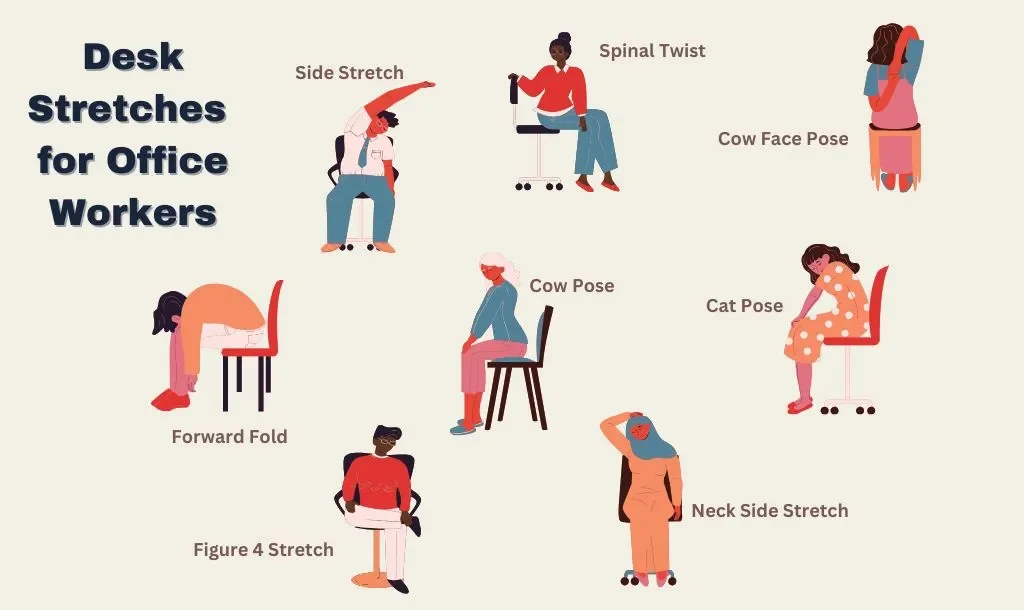
Lower back stiffness often results from prolonged static positioning. The seated spinal twist addresses this by gently mobilizing the spine and enhancing rotational range of motion. By twisting slowly and breathing normally, tension is eased in the back muscles and the spine’s natural alignment gets a subtle reset. This stretch can be done right at the desk without any special equipment, making it highly practical for remote workers.
Wrist Flexor and Extensor Stretches
To counteract wrist strain, stretches focusing on wrist flexors and extensors are essential. These involve extending the arm and gently pulling the hand back or down, creating a safe and effective stretch. The key is to stretch one wrist at a time to avoid undue pressure on the lower back and to always maintain gentle, pain-free movements.
Chest Openers Using Your Desk
Rounded shoulders and compressed upper spines commonly develop from hunching over devices. Chest openers using the desk surface can help reverse this postural pattern. By placing hands on the desk and leaning forward or away in a controlled manner, the chest muscles stretch and shoulders open. This movement encourages posture correction and relief from upper body tension.
Posture-Enhancing Stretching Techniques
Shoulder Blade Squeezes
Shoulder blade squeezes counteract the forward rounding of shoulders seen in many remote workers. The problem is that habitual slouching tightens chest muscles while weakening upper back muscles. Squeezing shoulder blades together activates and strengthens these upper back muscles, promoting an upright posture and reducing upper spine compression.
Hip Flexor Stretches You Can Do Seated
Hip flexors often become tight from prolonged sitting, contributing to poor posture and lower back strain. Seated hip flexor stretches help by creating gentle lengthening without needing to stand or use additional space. These stretches target the front of the hips, relieving tension and supporting better pelvic alignment necessary for overall posture stability.
Core Activation and Stretching
A weak or inactive core can exacerbate posture problems during remote work. Activating your core with subtle contracting while stretching enhances spinal support and alignment. Movements like slow seated pelvic tilts combined with deep breathing help engage these muscles, providing an important foundation for improved posture and less strain on the back.
Tips for Creating a Stretch-Friendly Remote Work Routine
Scheduling Stretch Breaks Throughout the Day
One common pitfall is going for hours without movement, which allows tension and stiffness to build. Setting regular reminders for short stretch breaks helps interrupt static postures and refreshes muscles. These breaks don’t need to be long—just a few minutes of targeted movement proves beneficial when practiced consistently.
Setting Up Your Workspace to Encourage Movement
Another cause of discomfort is working at poorly arranged desks that encourage static, awkward postures. Adjusting your workspace so screens are at eye level and using chairs with lumbar support reduces the likelihood of tension. Incorporating standing desks or spaces that invite brief standing or movement can complement desk stretches and further reduce fatigue.
Combining Desk Stretches with Ergonomic Practices
Simply stretching without attention to ergonomic setup may limit overall benefits. Combining stretches with good posture habits—like sitting with feet flat, shoulders relaxed, and back supported—helps reinforce the gains made during movement. This integrated approach leads to better long-term comfort and fewer issues related to repetitive stress or muscle imbalance.
Conclusion: Prioritizing Movement for Long-term Health
Remote work offers convenience but introduces the problem of prolonged sitting and poor posture, leading to tension and discomfort. Understanding these issues allows remote workers to take proactive steps by incorporating effective desk stretches. Addressing common tension points with targeted movements, alongside ergonomic adjustments and regular breaks, can significantly improve physical comfort and promote healthy posture.
Prioritizing consistent movement throughout the day helps prevent the pitfalls associated with sitting too long and encourages a more balanced, pain-free work experience. By making simple stretches a natural part of your remote work routine, you support your body’s alignment and wellbeing without requiring special equipment or extended exercise sessions.


