

Introduction to Low-Calorie Baked Salmon
Imagine coming home after a long day, craving a meal that’s both satisfying and beneficial for your weight management goals. Baked salmon with fresh herbs fits this scenario perfectly. This dish is not only low in calories but also packed with nutrients that support a healthy lifestyle. By baking salmon with a fragrant mix of fresh herbs, you create a flavorful meal without relying on heavy sauces or excessive fats.
Benefits of Salmon in Weight Management
Salmon is a powerhouse for those seeking to manage their weight. Its high-quality protein helps maintain muscle mass, which is essential for keeping your metabolism active. Moreover, salmon is rich in omega-3 fatty acids, which have been linked to improved fat metabolism and reduced inflammation. These healthy fats also promote satiety, helping control appetite and reduce overeating. For instance, a friend of mine who struggled with mid-afternoon cravings found that adding baked salmon to her weekly rotation helped her feel fuller longer and made her evening snacks less tempting.
Why Use Fresh Herbs?
Fresh herbs not only brighten the plate visually but also enhance the taste without adding unwanted calories. Unlike heavy dressings or creamy sauces, herbs such as parsley, cilantro, and thyme bring a burst of fresh, vibrant flavor. They also add micronutrients and antioxidants that boost overall health. In several cooking classes I’ve attended, chefs emphasize fresh herbs because they transform simple ingredients into restaurant-quality dishes effortlessly.
Essential Ingredients for the Recipe
The foundation of any great baked salmon lies in selecting the right ingredients. Quality and freshness directly affect the end result, making ingredient choice crucial.
Choosing the Right Cut of Salmon
For baking, medium-sized salmon fillets with the skin left on work wonderfully. The skin acts as a protective layer, locking in moisture so your fillets stay tender, not dry. Wild-caught Alaskan salmon is an excellent choice; it has a richer flavor and better nutritional profile compared to farm-raised versions. For example, a local market once surprised me with wild Alaskan fillets that elevated my usual recipe, making it a hit with my entire family.
Popular Fresh Herbs and Their Nutritional Value
Incorporating herbs like thyme, oregano, parsley, and cilantro introduces not only taste but also beneficial compounds such as vitamins A, C, and K. Parsley is known for its high vitamin C content, supporting immune health, while thyme has antimicrobial properties that can aid digestion. Beyond their health perks, these herbs blend well together, creating a complex flavor profile that enhances the natural richness of the salmon.
Step-by-Step Guide to Preparing the Baked Salmon
Preparing this low-calorie baked salmon is straightforward, yet following each step thoughtfully ensures a delicious and healthy result.
Prepping the Salmon Fillets
Start by rinsing your salmon fillets gently under cold water and patting them dry with paper towels. Leaving the skin on will help keep your fish moist during baking. Next, season the salmon evenly with kosher or Himalayan pink salt and cracked black pepper, using just a small amount to keep sodium levels in check. This basic seasoning sets the stage for the fresh herb marinade.
Mixing the Herb Marinade

In a small bowl, combine extra virgin olive oil with minced garlic—either freshly grated or preserved in oil—adding a fragrant punch. Toss in your fresh herbs, such as chopped thyme, parsley, cilantro, and oregano, blending them with salt and pepper to taste. For an extra layer of flavor, grate some garlic directly over the herbs before mixing. This herbaceous spread is gently applied over each fillet, ensuring every bite offers a savory, aromatic experience.
Baking Techniques for Optimal Flavor and Nutrition
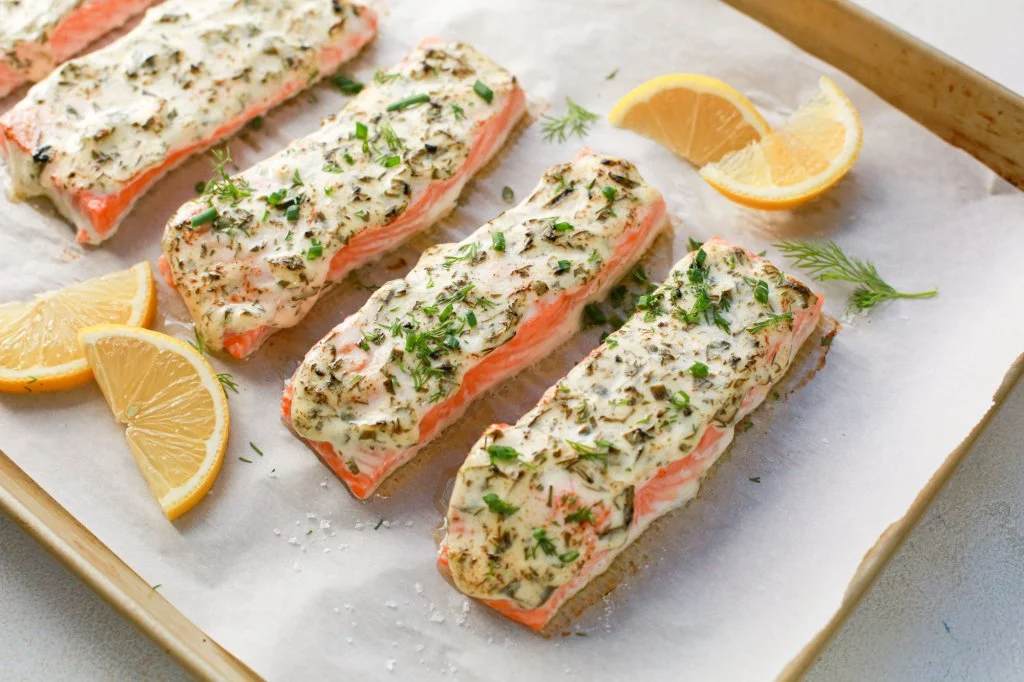
Place the herb-coated salmon fillets on a lined baking tray, making sure to rub the mixture over the tops and sides to prevent dry spots. Thin lemon slices can be laid on top of each fillet before baking to infuse a subtle citrus aroma. Bake in a preheated oven at 375°F (190°C) for 12-15 minutes, or until the salmon turns opaque and flakes easily with a fork. Leaving the skin on during cooking helps retain moisture, yielding tender and flavorful salmon that fits perfectly into a balanced diet.
Tips for Enhancing Flavor without Adding Calories
Boosting the flavor of your baked salmon doesn’t require extra calories if you use the right ingredients strategically.
Using Citrus and Spices
Lemon juice, freshly squeezed over the salmon just before serving, adds a bright, zesty note that lifts the entire dish. Additionally, spices like cracked black pepper and Italian herb seasoning blends or Herbs de Provence bring complexity without fat or sugar. I recall a time when I substituted the usual heavy sauces with a simple squeeze of lemon and a dash of herbed seasoning, which not only cut calories but also received compliments from my calorie-conscious friends.
Alternative Herbs to Try
If you want to experiment beyond the standard herb mix, consider introducing dill or basil. Dill pairs exceptionally well with fish, offering a slightly tangy flavor, while basil’s sweet notes contrast beautifully with the salmon’s richness. These herbs can be grated garlic’s perfect companions when added to the olive oil mixture, ensuring your herb blend stays dynamic and fresh throughout the seasons.
Incorporating Baked Salmon into a Balanced Weight Management Plan
Knowing how to integrate this low-calorie baked salmon into your daily routine helps maintain consistency without sacrificing taste.
Portion Sizes and Nutritional Information
A standard serving size of salmon is about 4 to 6 ounces. This portion offers approximately 200 to 300 calories, largely from protein and healthy fats that aid weight management. Keeping the portion within these guidelines prevents calorie overload while providing satisfying nutrition. One of my nutrition clients found that sticking to these portion sizes allowed her to enjoy protein-rich meals without feeling deprived, aiding her steady weight loss.
Complementary Side Dishes for Low-Calorie Meals
Pair your baked salmon with steamed vegetables, such as broccoli or asparagus, or a small serving of quinoa or brown rice to balance your plate. These sides add fiber and essential nutrients, promoting fullness and stable blood sugar levels. Avoid heavy, creamy sides to maintain the low-calorie integrity of your meal. Eating this way not only supports weight goals but also creates a diverse and enjoyable meal experience, reducing the temptation to stray from healthy habits.


