

Understanding the Importance of Cleaning and Sanitizing Cutting Boards
How Cross-Contamination Occurs in the Kitchen
Cross-contamination happens when harmful bacteria or allergens transfer from one food item to another. In many kitchens, cutting boards serve as the common surface for preparing various ingredients. If not cleaned and sanitized properly, these boards can become breeding grounds for pathogens. Raw meats and poultry are frequent culprits, as they harbor bacteria like Salmonella and E. coli that can easily spread to other foods.
The Role of Cutting Boards in Food Safety
Cutting boards play a critical role in maintaining food safety. They provide the surface for chopping, slicing, and dicing, making them a potential carrier for microbes if neglected. Proper cleaning and sanitizing routines reduce the risk of foodborne illness. Understanding how to care for cutting boards ensures that every meal prepared is safer for consumption.
Choosing the Right Cutting Board Material for Easy Cleaning
Comparing Plastic, Wood, and Bamboo Boards
Selecting the right cutting board material affects hygiene and maintenance ease. Wooden boards suit lower-risk foods such as vegetables, fruits, and bread, thanks to their natural antimicrobial properties. Plastic boards are favored for raw meats, seafood, and poultry because they are less porous and often dishwasher safe. Bamboo is an eco-friendly option, less porous than wood, but needs careful handling to prevent cracking. Other materials like glass or stone have limited uses and may damage knives.
Material-Specific Cleaning Challenges
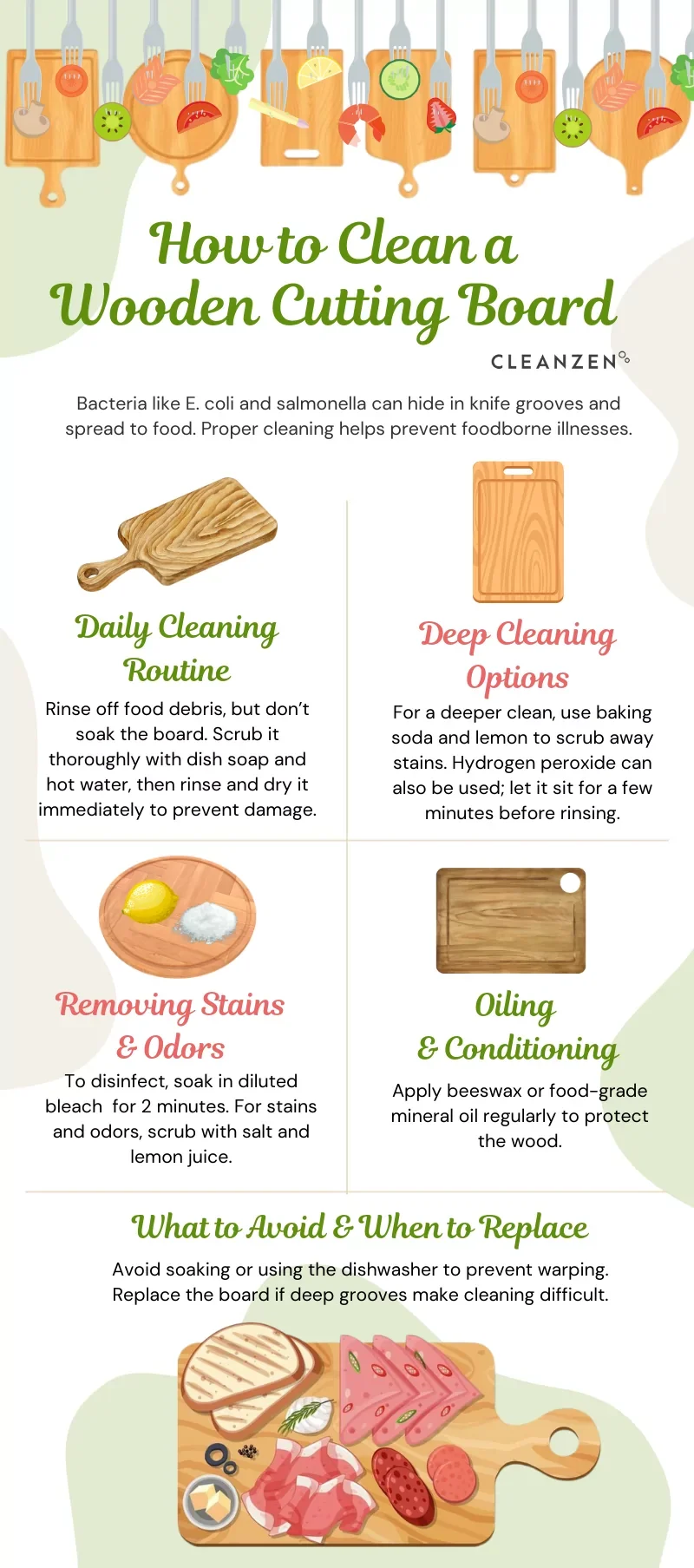
Each material presents unique cleaning challenges. Wood requires gentle scrubbing and thorough drying to avoid warping or bacterial growth in cracks. Plastic boards are generally dishwasher safe but can develop deep grooves where bacteria hide over time. Bamboo boards must be hand-washed and periodically oiled to keep them in good condition. Recognizing these differences helps maintain cleanliness and prolongs the board’s life.
Step-by-Step Guide to Effective Cleaning of Cutting Boards
Pre-Rinse and Scraping Off Food Residue
Begin cleaning by scraping off leftover food particles. A firm plastic or wooden scraper works well to remove debris without damaging the surface. Follow this with a rinse under running water to loosen any remaining residue. This initial step is essential for thorough cleaning.
Washing Techniques: Soap and Water vs. Dishwasher
Washing with hot, soapy water effectively removes grease and particles from most cutting boards. Use a scrub brush to reach grooves and textured surfaces. Plastic boards often tolerate dishwasher cycles, which combine high heat and detergent for deep cleaning. Wooden and bamboo boards should avoid dishwasher use to prevent splitting and warping.
Using Natural Cleaning Agents for Tough Stains
Natural agents like lemon juice or baking soda can remove stains and odors. Lemon’s acidity breaks down discoloration while baking soda acts as a gentle abrasive. Apply these agents, let them sit briefly, then rinse thoroughly. These methods provide safe alternatives to harsh chemicals.
Sanitization Methods to Eliminate Harmful Bacteria
Using Bleach Solutions Safely
Bleach solutions are powerful sanitizers for cutting boards when used correctly. A typical mixture is one tablespoon of unscented bleach per gallon of water. After washing, soak or wipe the board with this solution, then rinse well and air dry. Proper dilution and rinsing are crucial to avoid contamination from bleach residues.
Alternative Sanitizers: Vinegar, Hydrogen Peroxide, and More
Vinegar and hydrogen peroxide offer effective and less toxic sanitizing options. Vinegar’s acidity helps kill bacteria, while hydrogen peroxide works as a strong oxidizer. Both can be sprayed onto boards after cleaning and left to sit briefly before rinsing. These alternatives are ideal for those sensitive to bleach or looking for eco-friendly choices.
Maintaining Cutting Boards to Prolong Their Safe Use
Regular Inspection for Cracks and Deep Grooves
Inspect cutting boards frequently for cracks or deep grooves that harbor bacteria and are hard to clean. Damaged boards should be sanded smooth or replaced. Maintaining a smooth surface reduces hidden contamination risks and extends the board’s usability.
Proper Drying and Storage Tips
After cleaning, drying boards completely is vital. Moisture encourages microbial growth and wood warping. Stand boards upright or use racks that allow air circulation. Avoid storing boards flat or in enclosed spaces while still damp.
Expert Tips to Prevent Cross-Contamination Using Multiple Boards
Color Coding and Assigning Boards for Different Food Types
Implementing a color-coding system is a practical way to avoid cross-contamination. Assign specific boards for raw meats, vegetables, seafood, and ready-to-eat foods. This visual cue helps keep preparation organized and prevents harmful bacteria from spreading between food groups.
Best Practices for Handling and Switching Boards During Food Prep
During food preparation, switch boards carefully as needed. Rinse or sanitize boards before reuse, especially when alternating between raw and cooked ingredients. Keeping knives sharp also minimizes damage, preserving the board’s surface and reducing bacteria traps. These mindful habits contribute significantly to kitchen hygiene.


